There are over 360 Appellations d’Origine Contrôlée in France and a total of 745 044 hectares of vineyards. However, of this total amount, only about 60% (446 000) of vineyards fall under an AOC classification. Furthermore, only 65 hectares of Chenin Blanc make up one of the smallest appellations in France. This means the Jasnières wine production accounts for 0.014% of wines labelled under an AOC of France.
The Jasnières appellation is found in the Sarthe département, north of Touraine in the Loire Valley. The appellation was created on the 31st July 1937 and is the northernmost appellation of the Loire Valley. The vineyards are planted on steep south-facing slopes along the Le Loir, a sub-tributary of the famous La Loire river. Tuffaeu, a chalky limestone that breaks down into flint clay makes up the soil composition which creates sublime minerality that one is to expect from the white-only appellation of Jasnières. Tuffaeu is also is the main stone that was used to build most of the châteaux in France (including the one we’re staying in!) leading to the troglodyte caves which you expect to see when visiting the Loire Valley. The expansive caves are also home to cellars and tasting rooms dotted around, one of which we visited in Saumur!
The south-facing hillside that slopes into the Le Loir tributary receives enough warmth to carry the Chenin Blanc to a beautiful maturity with the limestone pebbles generating enough heat overnight to create a well-balanced microclimate and terroir for these wines. The Bercé oak forest runs along the northwestern side of the vineyards protecting it from the winds and regulating rainfall and therefore humidity. Various winemaking families from the region have told me how essential this was in combatting the formidabble frost of the 2021 growing season in which buds were destroyed, and the mildew that came afterwards as a result of humidity.

Domaine de Cézin is one such family that lost almost half of their crop to the frosts but remained resilient and implemented a change in their pruning routine in order to slow down bud break to combat future extremes that mother nature might throw at the vineyards. The Bercé forest is not only important for regulating the microclimate of Jasnieres, but it is also produces some of the finest oak barrels in France that are used internationally as well as in the famous region of Cognac.
On the palate you can expect to have a richer mouth-feel, with minerality and flintiness coming to the front. It has slight indications of fleshy peach, apricot and a white floral aromatic. It is not as fruit forward as other chenins coming from surrounding regions. The appellation allows for it to be bottled in either a dry or sweet style. The sweeter Jasnières wines that I have had the pleasure of tasting have a deeper viscosity to them, with the honeyed aromatics being more pronounced along with dried fruits such as apricots and apples but always being underlined with a thread of minerality and still retains such incredible acidity. It really is the minerality, flintiness and smokiness that you’re looking out for when trying wines from the Jasnières appellation.
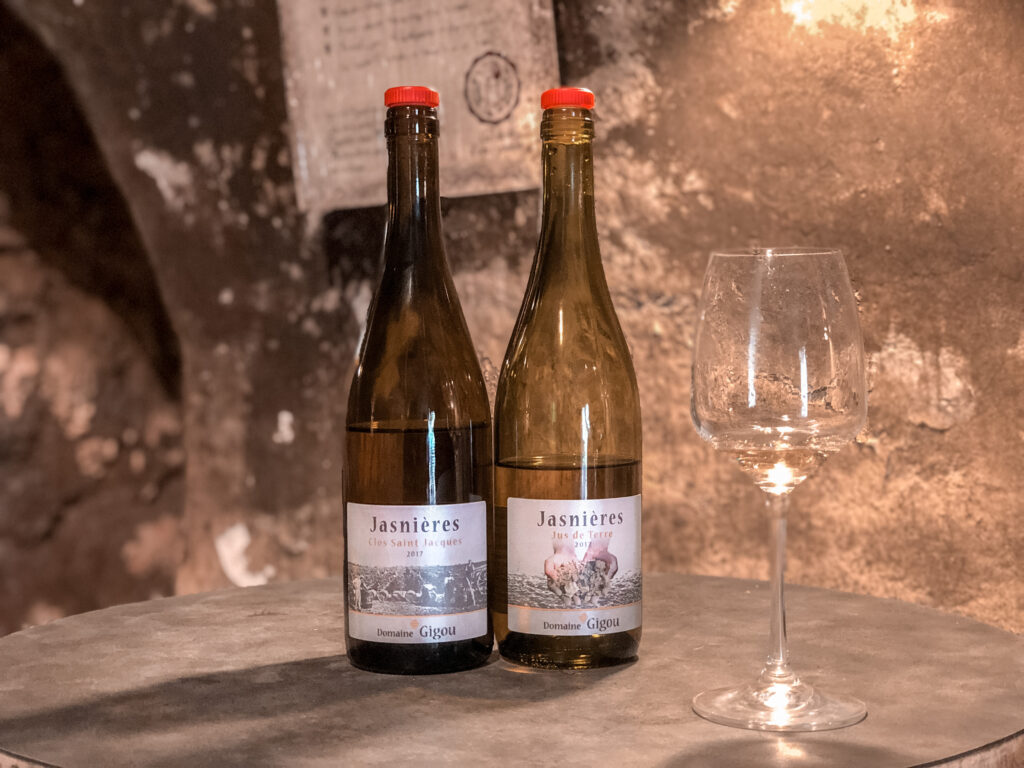
Another domaine that we visited that has perfected the craft of making an exceptional Jasnières is Domaine Gigou. We didn’t receive as warm of a welcome at this domaine as we did at the others but that takes nothing away for the quality of Jasnières that was poured into our glasses. The Clos Saint Jacques is named after the specific vineyard site and has a little more age than the rest of the Jasnières that we were tasting. It has a delectable equilibrium between acidity and minerality with strong quince and earthy aromas, always with that underlying minerality. This was our favourite Jasnières due to the incredible balance between every aromatic, sense and structure. Domaine Gigou’s other styles of Jasnières all had great acidity, with more citrus notes than it’s older counterparts. We would have loved to find out more about the winemaking techniques and philosophies but were quickly hurried out during our tasting. It simply means we must return.
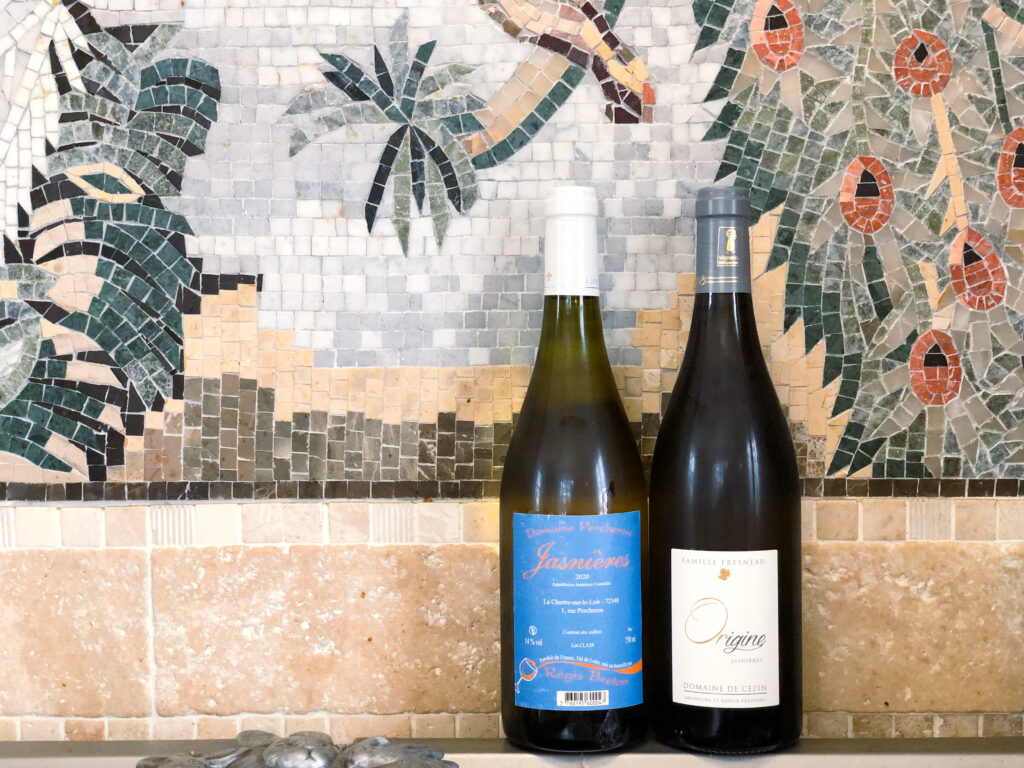
Domaine de Cézin produces two Jasnières styles with their 3 hectares of vineyards. The ‘Origine’ is a dry, flinty wine with hints of peach and a salinity to its finish. It comes in at 13.8% in alcohol, which just goes to show how the warm south-facing slopes and flinty pebbles help to reach maximum maturity. The fruit on this wine is more shy than other Jasnières that we’ve tried but lends itself more towards a honey, quince and floral flavour profile. A sweeter version of the Jasnières is a vine dried wine coming from Domaine de Cézin that had incredible acidity for its age and will continue to develop complex honey and dried fruit characteristics with a freshness that the minerality adds to it. Whilst visiting their underground tasting room, I saw where they kept their wines during the war and tasted the entire range. You can find it here if you want to know more about the earthy cellar where Domaine de Cézin has been producing their wines for nearly a hundred years.

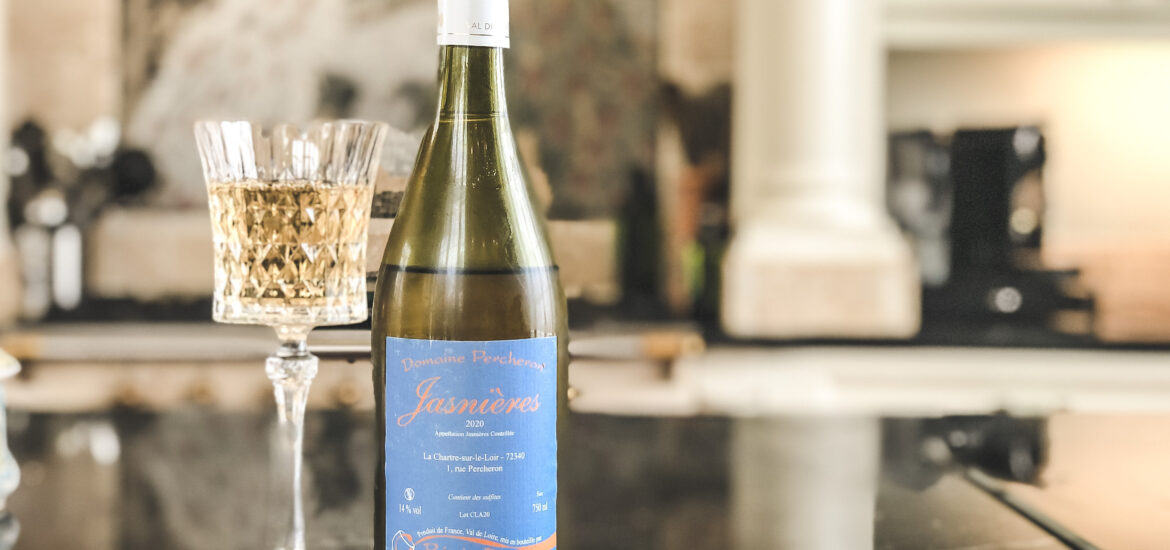
Another Jasnières that we tasted was the Domaine Percheron. We actually haven’t been able to visit the winery and winemaker due to the seasonal difficulty of coming over winter but we were lucky enough to grab this off the top shelf of our local grocery store. The Jasnières is a 2020 with 14% alcohol. Remembering that the 65 hectares of Chenin are spread along only 4km of slopes, it is easy to understand the similarites in maturity and terroir influences between the different wines especially when the purity of the vineyards are highlighted by every winemaker from this region. However, we were underwhelmed by this Jasnières. It was unbalanced and not a lot of the characteristics we were used to tasting from other Jasniere were present. There was a slight volatility to the wine and strong earthy aromas.
Overall, Jasnières is a small AOC located in the northern parts of the Loire Valley with a strong focus on creating a varietal wine that is indicative of the limestone soils the vineyards are thriving in. Situated perfectly along Le Loir, the terroir is distinctive and easily recognizable in the bottle. I would highly recommend trying to sample a few different styles when visiting the Loire – it is unlikely such a niche AOC will get anywhere outside of the Loire Valley, let alone France. Which is shame to the wine community but it is unlike the situation that other wine regions of the world face who do not have the opportunity to share their wines with the world due to a lack of tourism, knowledge and interest.
Even when in France, I am looking to discover what is often unknown but so deserving of the respect we as winemakers or wine enthusiasts afford so many other regions. I can feel the potential of the Jasnières wine region and the effort that winemakers are going through to highlight the terroir in their bottles but perhaps a little more development is needed, and increased recognition could see these wines having a serious place in the French wine industry.
Chasing wine in every corner of the world,
Tristyn