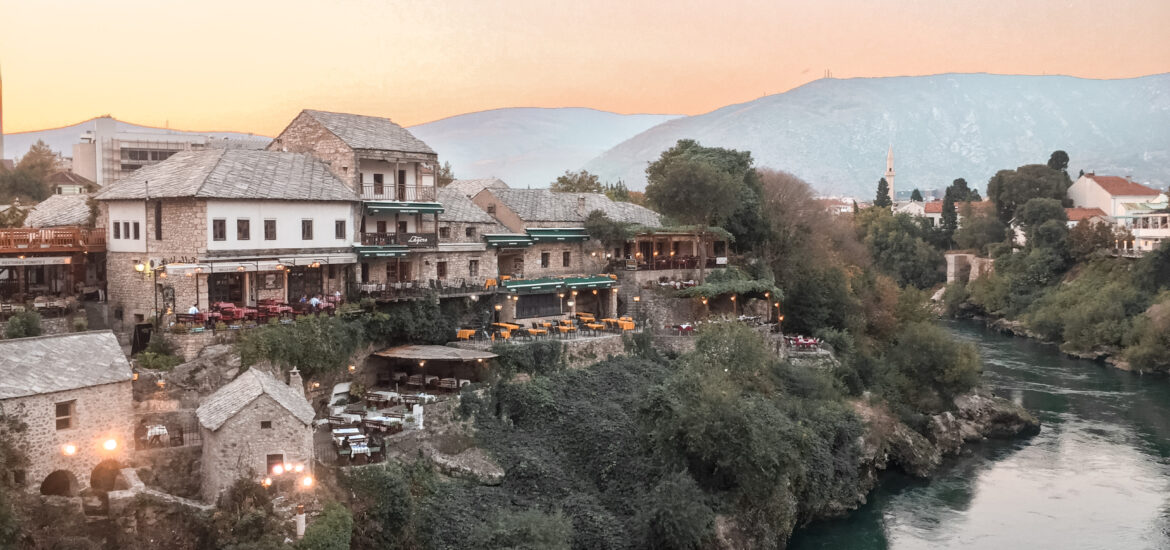
After driving our little Fiat from Dubrovnik where scuba diving in the Adriatic for a bottle of wine is the norm, we continued along with our wine exploration of Eastern Europe which saw us eventually crossing the border from Croatia into Bosnia & Herzegovina (BiH).
Our little map took us all the way up hillsides, along single lane roads with rocky outcrops and shadowy mountains. We easily drove for over an hour – our destination getting more and more remote as we we continued along on our journey. Eventually, after driving precariously down a gravel road we pull up to this tiny little border post. An armed guard walks toward us. We had been warned that the border guards can be very strict and are often happy to hand out fines with little convincing (such as stopping too short of the booms and not the very inconspicuous white line).
The armed guard walks towards us. He looks us up. And then down. We’re nervous.
We haven’t done anything wrong. It’s starting to look like we have. This is very clearly not a border post that handles hundred of crossings a day. He’s just as confused as us – this is not the right place. This is an incredibly remote border post that only about a dozen people are authorized to cross over, “It’s for those living in the mountains” he explains to us with no idea how we managed to find it (me and him both).
A note to self: this is the last time I let a certain someone be the navigator again. The guard had a good enough sense of humour to let us cross into Bosnia & Herzegovina only to turn the little Fiat around and backtrack down those gravel roads and into Croatia again.

Before driving across the correct border post, we had very little information or preconceptions of Bosnian wines. We knew it existed, and we planned our short trip around the Southern wine region with the information that we could find.
In order to understand the winemaking culture and history of such a place, you have to understand its tumultuous history. It has been just over 26 years since the war in former Yugoslavia ended with several distinctly divided states each with a unique history of winemaking that continued to develop in isolation from each other.
In Bosnia & Herzegovina, wine production has been slowly increasing but it is still not at the same capacity as it was prior to the war. For obvious reasons, winemaking traditions and vineyards suffered during this period with at least half of all plantings lost to the destruction. The contrast between leafy vines brimming with ripe bunches of life dotted with military shells between the rows is something local winemaker, Josip Brkić, recalls just before harvest in 1992. Wine consumption per capita reached an all time low of 1L in 1996 which is just four short years after wine consumption was at it’s highest of 5.1L in 1992. The evidence of the direct result that the war had on vineyards and wine production is easily seen in the statistics. It has now almost tripled since it’s lowest point, currently being at roughly 3.5L. We can see where the trends are taking us but for now the Bosnia & Herzegovina wine region still suffers from little industry support, access to capital and international recognition.
Wine is helping to tell the historical story of such an exceptional, dramatic and inspiring region with triumphant stories of winemakers restoring their family vineyards, choosing to highlight local varieties over more popular international ones and developing multi-cultural teams that would not have been possible in the years after the war.

According to statistics produced by the BiH Agency of Statistics, there are roughly 11 000 wine producers with over 95% of these being for home consumption and a little over 200 farms are actually producing wines from more than 2 hectares of vineyards. Although 200 producers is still low in relation to its neighbours, I am sure it’s at least 195 more than you expected from the wine region of Bosnia & Herzegovina. I’m rooting for that to change – for there to be increased awareness and appreciation for these wine regions that often go unnoticed. There’s no reason that a Herzegovinian blend of Blatina and Vranac shouldn’t be aging alongside your Bordeaux blend in your cellar.
Traveling into BiH, we knew there was an unofficial wine region near Trebinje and so after spending a few days in the old town capital of Mostar, with cobblestone streets lined with flickering lanterns, we drove on to discover explore the vineyards. I initially used the word discover, but that’s not an accurate or fair representation of the effort and dedication found in Bosnian wineries. I am not the champion of unknown wines – I’m not discovering these wines that have existed for decades, if not hundreds and thousands of years. I am simply exploring the wines of the world – stumbling onto regions that have not yet achieved the recognition they so justifiably deserve and Bosnia & Herzegvovina is one such region.

Our few short days spent exploring the wine region was clearly not enough, but long enough to dip our toes into the wines of Bosnia. The more I explore this corner of the world, the more I am fascinated about the wines being created and the people pushing behind the wines. An essential aspect of understanding the wines being made, is to understand the history of those working to overcome the difficulties they’ve been faced with. A common challenge I hear from winemakers in regions such as Bosnia, Romania, Ukraine and Slovenia – is that the reputation the wines received during an era of quantity over quality is still hanging over their wines. This bias is not just coming from the international community but largely locals still recalling the homemade wines their grandparents produced using the same local grapes, having memories of drinking these low-quality wines around the dinner table. The reinvention and rediscovery of these wines is rapidly increasing the perception of these often unheard of wine regions with winemakers showcasing their talent and worthiness of the wine. The winemaker’s only weapon in this fight is to show that the proof is in the pudding or in this case, the worth is in the wine and we have found that it definitely is.
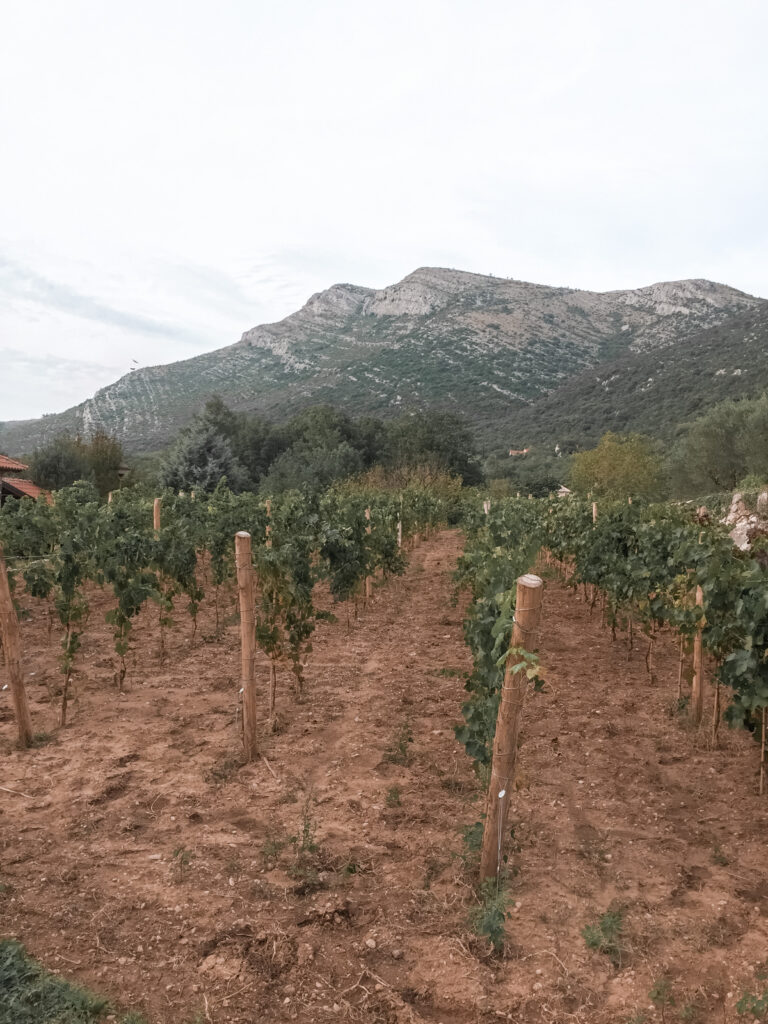

The vineyards of Bosnia & Herzegovina are located mostly in the South, the Herzegovinian region. A quick google search will guide you towards Čitluk and Međugorje but often leaves out the region of Trebinje. Which is exactly where we chose to explore.
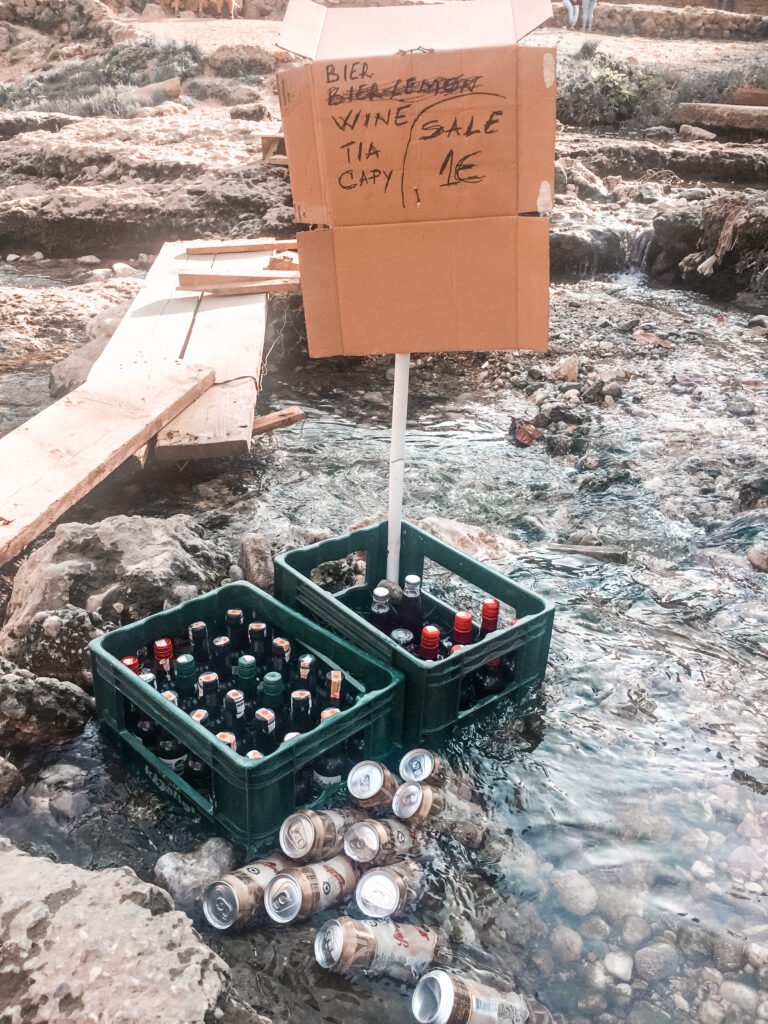
The climate in the South is Mediterranean and the soil type is predominantly dry, stony limestone and karst. There are two main varieties that you will find throughout the country – as a gift in your AirBnb, in a stall on the side of the road or being chilled in the Neretva river at the bottom of the famous Stari Most bridge.
These local varieties are:
- Žilavka which is a phenomenal white variety that produces exceptional quality and shows enormous potential. It is a versatile grape that was often distilled for Lozovača and Komovica, which are both grape brandy’s that have been distilled using grapes in different stages of production. Žilavka has enough strength to stand alone as a monovarietal wine with little intervention but does well in oak, as well as oak alternatives such as acacia and can be fermented as an orange wine. It is incredibly fascinating to see the development of Žilavka as you drive along the ‘wine route’, with different styles emerging from one winery to the next. No matter where you are in BiH, Žilavka will always have a story waiting to tell you. It’s an exciting adventure swirling around your glass. The second most important grape in Bosnia & Herzegovina is,
- Blatina that is more shy than its white Balkan counterpart having gentle tannins, and a polite flavour profile of red-berries, some spiciness and depending on the producer, a slight bitterness to its finish. This in part means it is often used for blending, either with Trnjak (another local variety) and Alicante Bouschet which is known under it’s local name of Kambuša. Blatina’s challenging genetic structure means less and less plantings are found of the Blatina grape. It only has female flowers and cannot self-pollinate (as most vines do) and therefore needs to be planted in vineyards with other varieties in order to ensure cross-pollination. During flowering, if the season is particularly wet this can prevent the other vines from being able to pollinate Blatina and little to no grapes will be produced. This is locally known as praznobačva that translates to ’empty barrels’ and is not something a winemaker ever wants!
Luckily for us, we were able to taste a varietal wine of Blatina and are hopeful that the potential of this wine is not lost in the challenges it creates for itself.
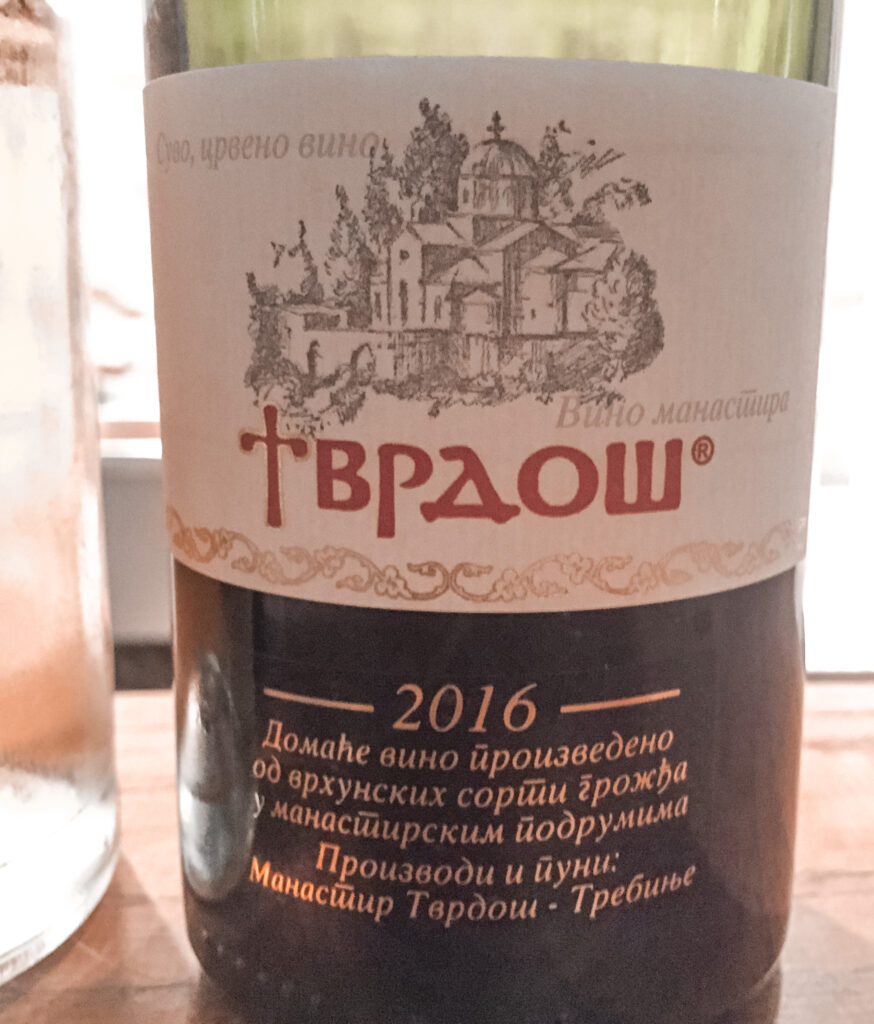
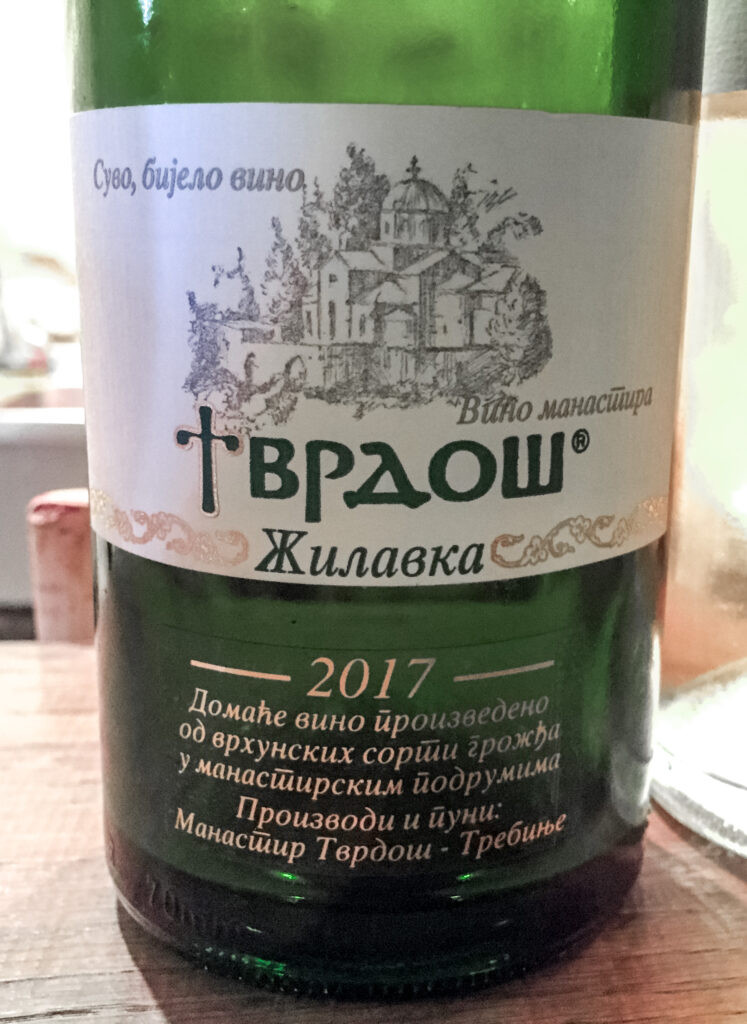
Traveling to the wine region of Trebinje meant we were able to taste Vranac, which is commonly found here. It disguises itself as bold red wine due to it’s dark ruby and inky hues but has a surprising brightness to it, with elegant tannins and light, fruity flavours such as cherries and hints of violets. It is a grape that can hold onto it’s acidity with great sugar levels at harvest. I am surprised that there isn’t a greater emphasis on the region of Trebinje, as more vineyards are being planted and wineries being established. The warm, dry weather during summer provides ideal conditions and snow-free winters allow for winemakers to take a breath when concerning themselves with frost.

The famous Balkan white, Žilvaka, produces incredibly pronounced whites that are incredibly versatile in the winery. It develops magnificently into a fresh, fruity style that gives aromas and flavours of spring meadows, apricots, orange peels and zestiness of citrus whilst it can also stand up incredibly strong against oak maturation. This results in an incredible relationship between fruit, oak and fine acidity. It also does well in alternative oak, such as acacia. A fine example we tasted was from Podrumi Vukoje, coming from imperial vineyards fermented and matured in acacia barrels for 24 months with notes of quince spiciness, honey and dried peaches and apricots. The acacia brings a vanilla undertone to it that also seems to enhance the minerality of this wine. The experience of this was silky, elegant and mind-blowingly memorable.
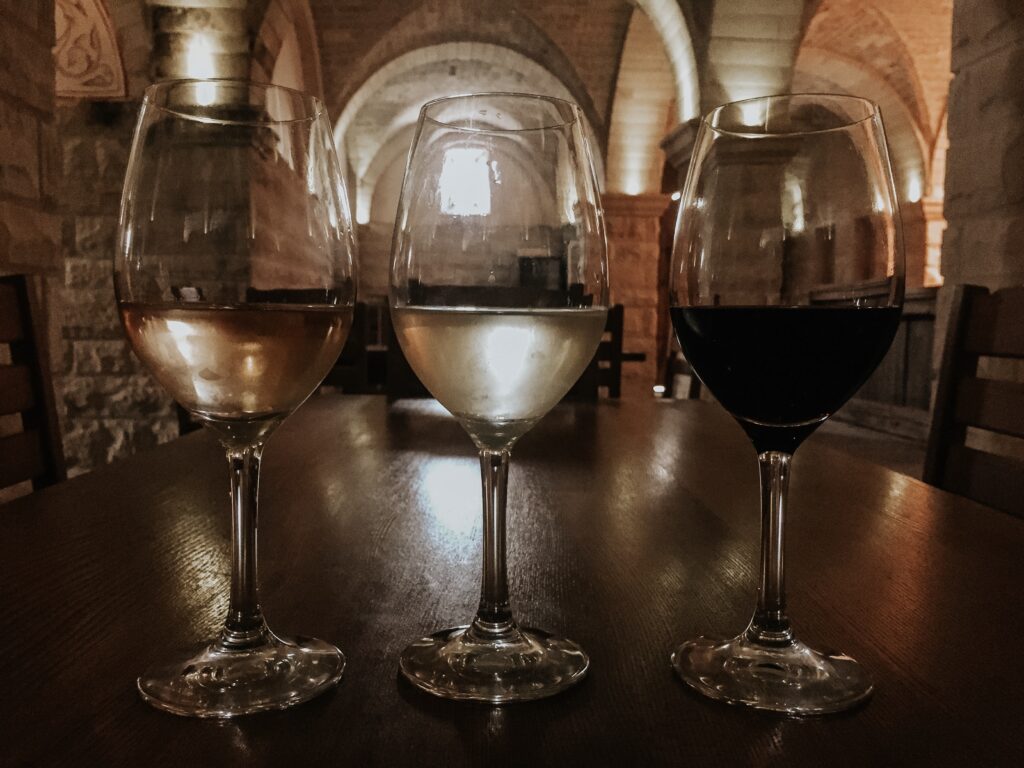
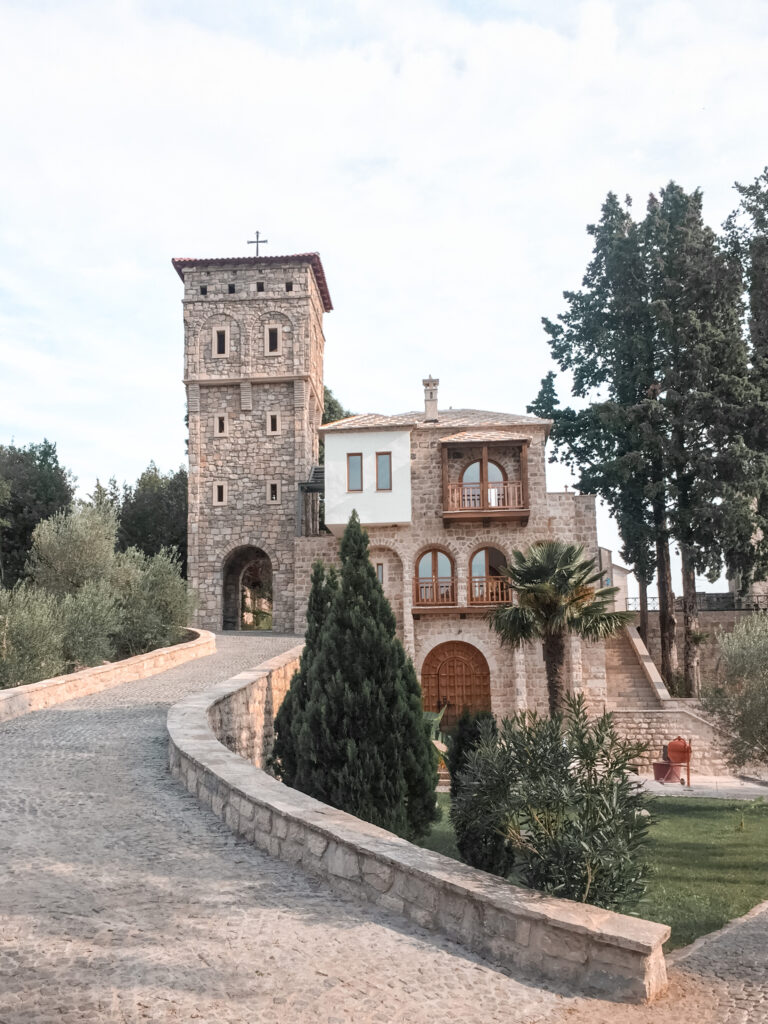
Continuing along on our travels through the Herzegovinian region, we came across the popular monastery winery that has been making wine since the 13th century with reconstruction taking place in 1996 and a new cellar being built in 2006 near the Trebišnjica river that’s lined with vineyards. A great indication of how turbulent histories can lead to the emergence of seemingly ‘new industries’ in wine producing regions that have existed since the Illyrian times, some 2000 years ago. Tvrdoš monastery winery is a fascinating experience to see 100 year old barrels still aging wine, and to meet the makers behind the ongoing tradition.
Bosnia & Herzegovina is not a country whose wines should go unnoticed. The winemakers are working tirelessly to not only establish themselves in the international market, but the local varieties that they grew up with. There is so much more to be learnt from the wines coming out of this region and not just from a geographical aspect but also from a varietal focus that these vines have characteristics that could see them being planted internationally as well as the alternatives to French and American oak. The most ‘unusual’ oak barrels that you’ve probably heard your sommelier tell you your wine has been aged in is probably Hungarian or Slavonian but we have access to Bosnian oak, Romanian oak, Polish oak and these are all things we can learn and integrate into the international wine community.
My exploration of the Bosnian wine and food scene continues! There’ll be another upcoming post so you can follow me on my wine experience of the Balkans as I detail some of the wineries we visited in Bosnia & Herzegovina as well as the food journey we found ourselves taking with every single mouthful of food.
Bosnia & Herzegovina is a fascinating country that deserves to be explored, respected and tasted.
Chasing wine in every corner of the world,
Tristyn