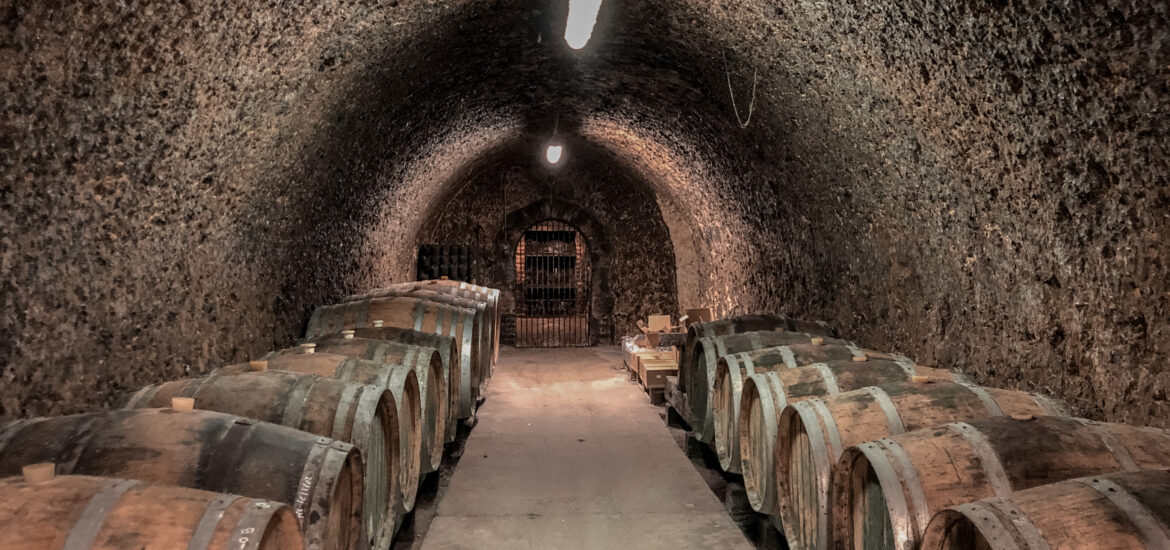
Have you ever just wandered in one direction and stumbled upon vineyards and an undergound cellar? That’s what we did this weekend. We strolled through the gates of our château in the Loire Valley and took a left turn up a small village road.
After passing through the open fields and the blooming daffodils, we encountered Domaine de Cézin. A fourth generation winemaking family that has been producing under the Coteaux du Loir and Jasnières appellations for nearly a hundred years.
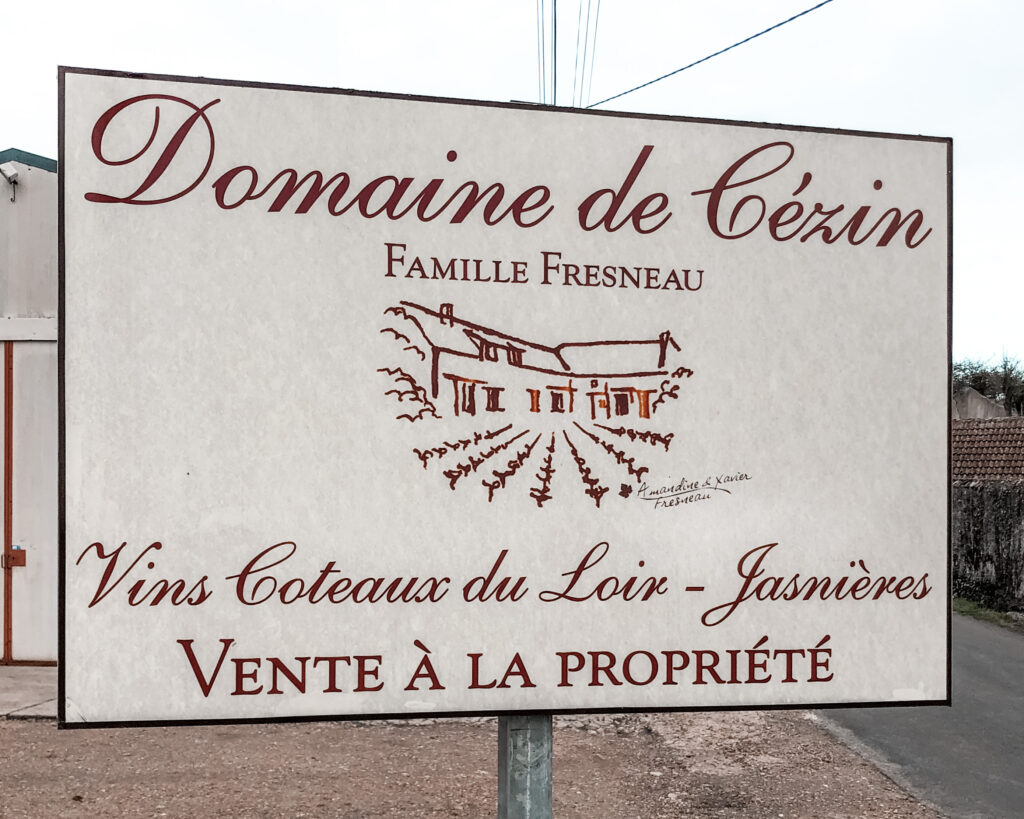
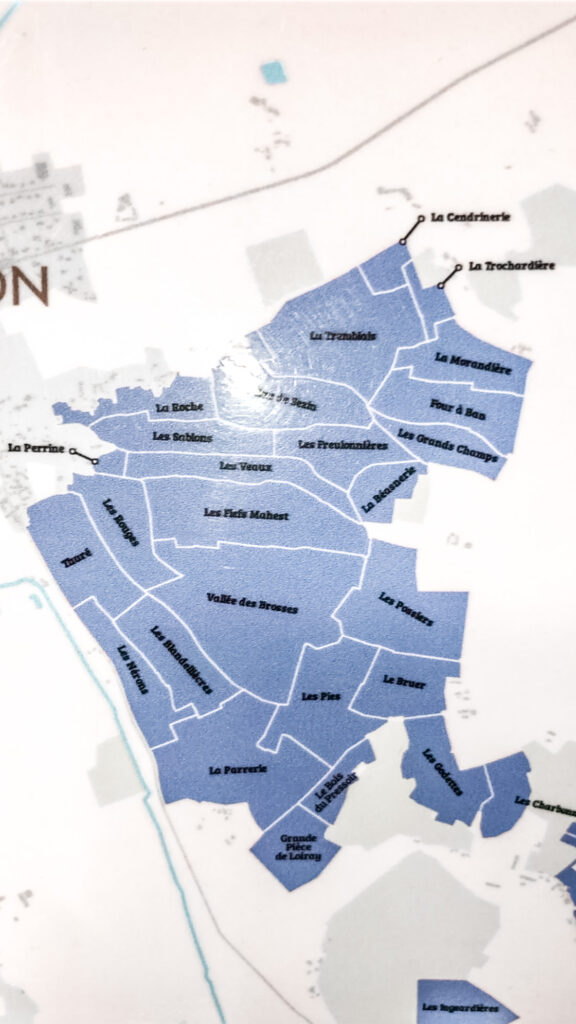
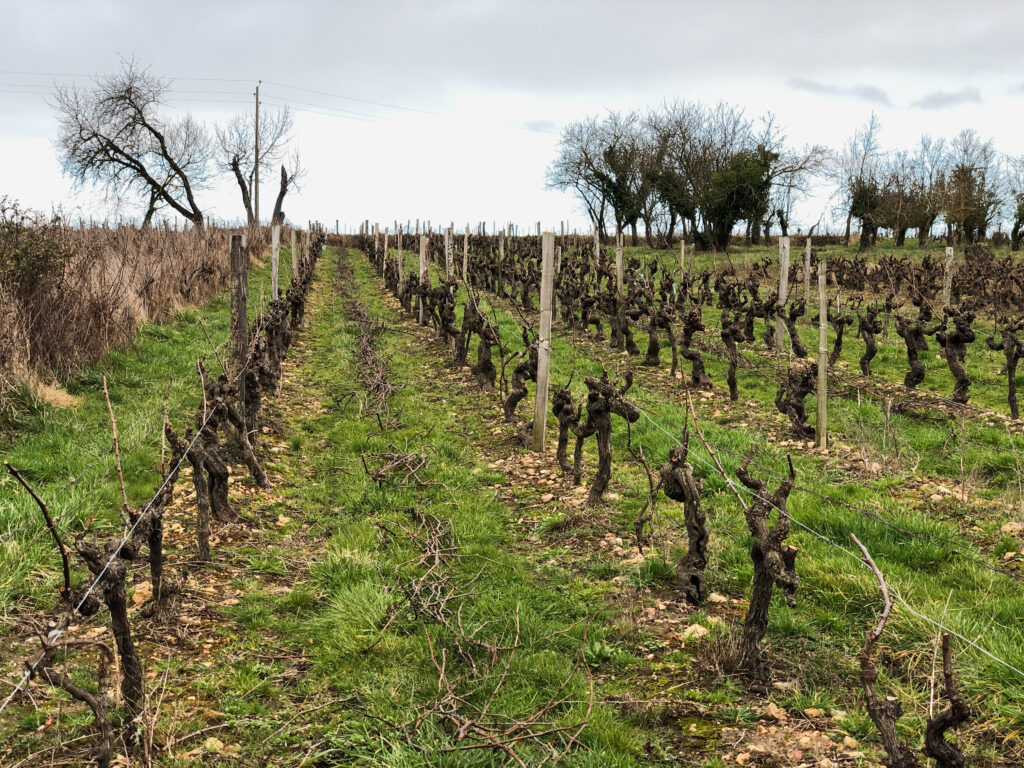
The Fresneau family has been making wine on the property since 1925, and have slowly expanded their vineyards from less than 6 hectares to now farming and cultivating 17 hectares. The duo winemaking team is now being led by brother and sister Amandine and Xavier. As in typical French fashion, the family own a small demarcated block within a larger vineyard site – all dotted along the different regions. It’s fascinating to see that each individual vineyard site is specifically named and plotted along a map and hasn’t been demarcated with an analytical B12 or A5 block name that we’re usually used to. Amandine smiles at me whilst pointing out the names of the vineyards in which her family owns a couple of rows.

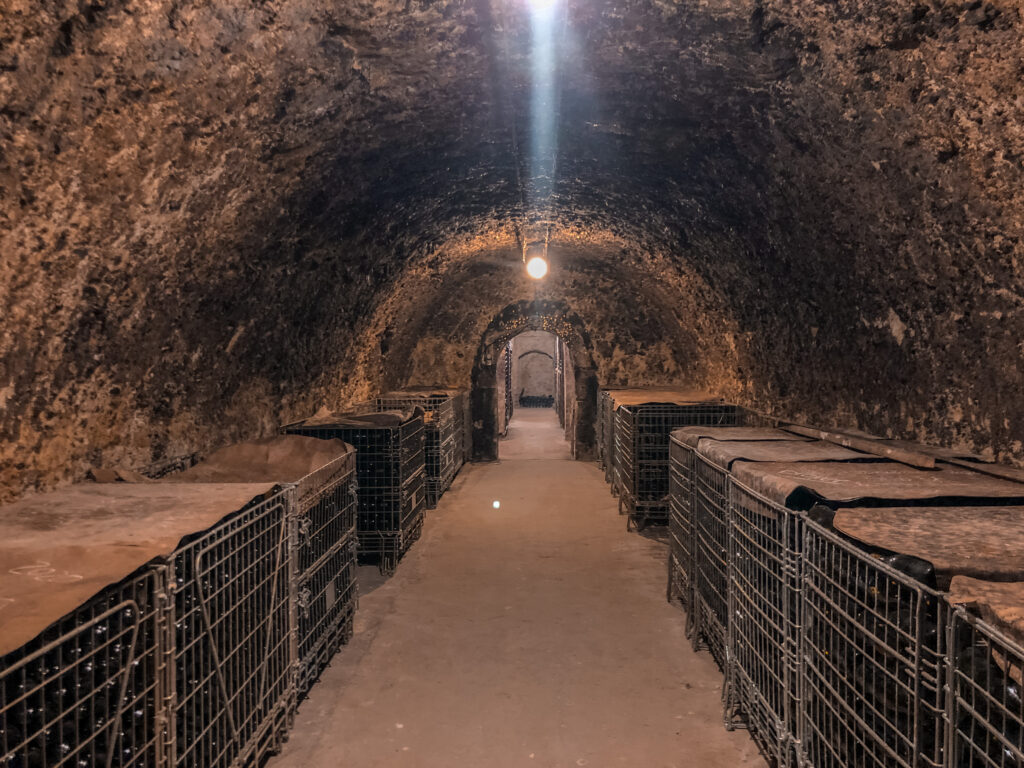
Sitting at the wooden bar of their tasting room, a large wooden gate demands your attention. Through the slits you can just make out a wall lined with French barrels. Amandine ushers us through the gate, with the very wine she’s been learning to make since she was a little girl being swirled in our glass. She explains to us that the barrels lining the underground cellar are standing empty due to last year’s April frosts taking a large portion of their harvest.
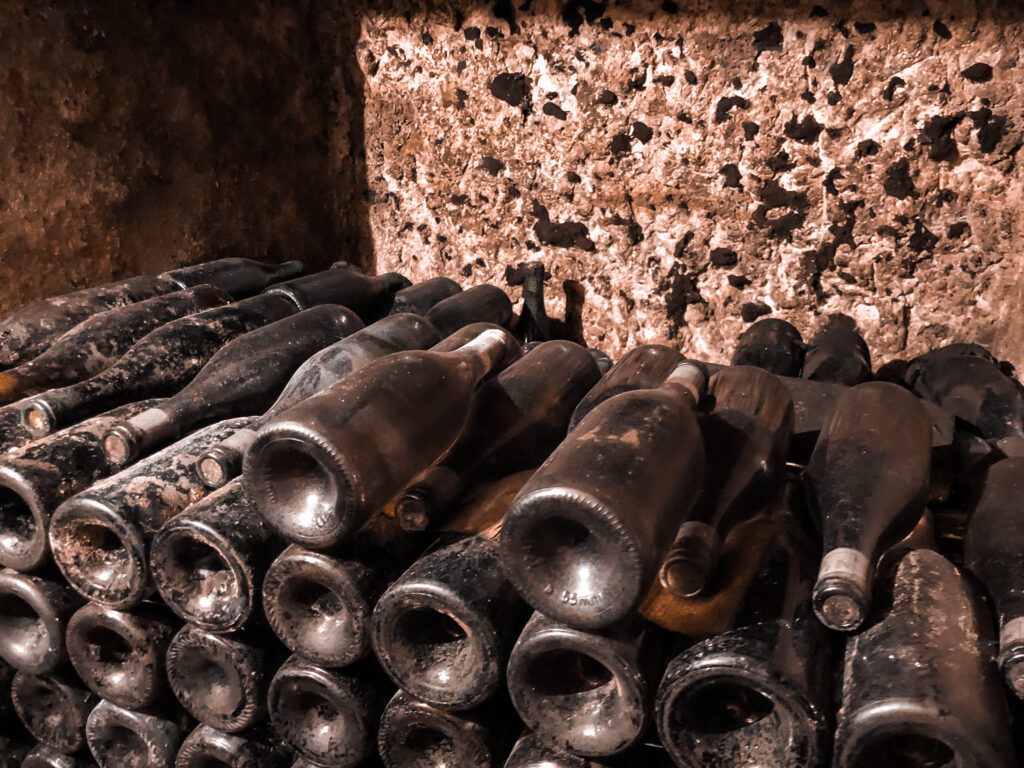
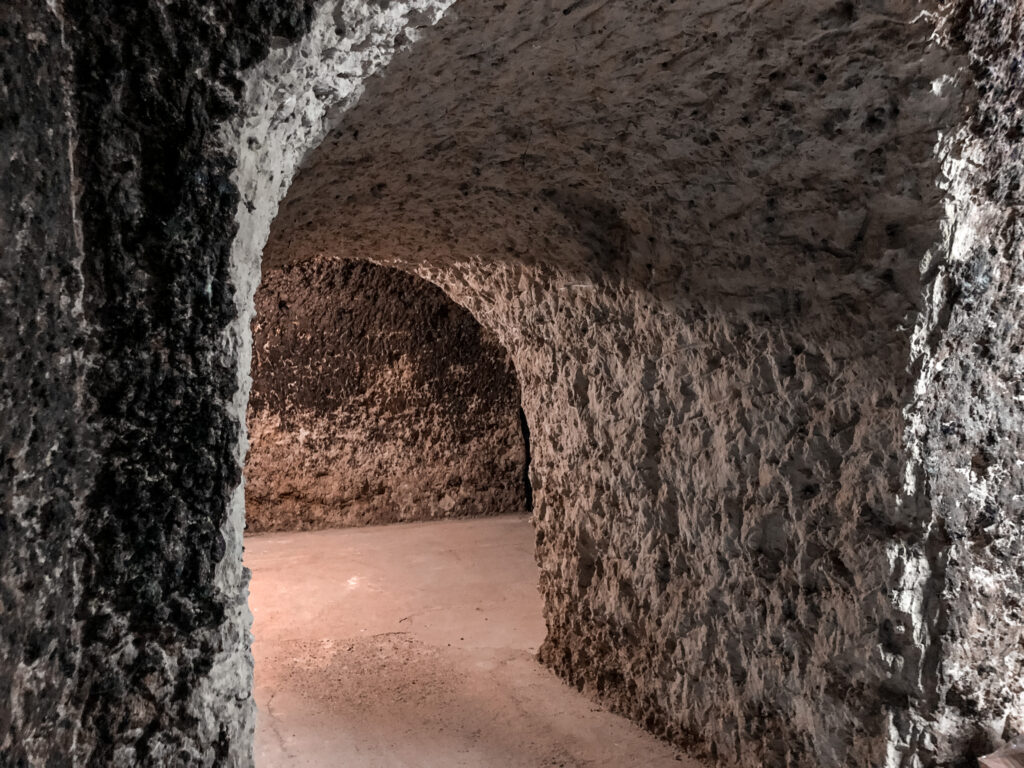
Their underground caves are right beneath the vineyards, walking through and looking at the carved walls you can actually see the roots of their sixty year old vines. The caves are incredibly humid and cool, maintaining a constant twelve degrees all year round. The specific stone that these caves have been carved out of is tufa limestone, the walls that were once white are now blackened and moist with all the fungus and moulds making the caves their new home. Little drops of moisture glistened on the mould – it was fresh, earthy, alive and healthy. The presence of mould in such a climate is an indication for the right temperature and humidity for raising wines. Each growth of mould has different patterns and colours, deep magentas and darkened coffee shades, creating an abstract painting along the underground stone walls.
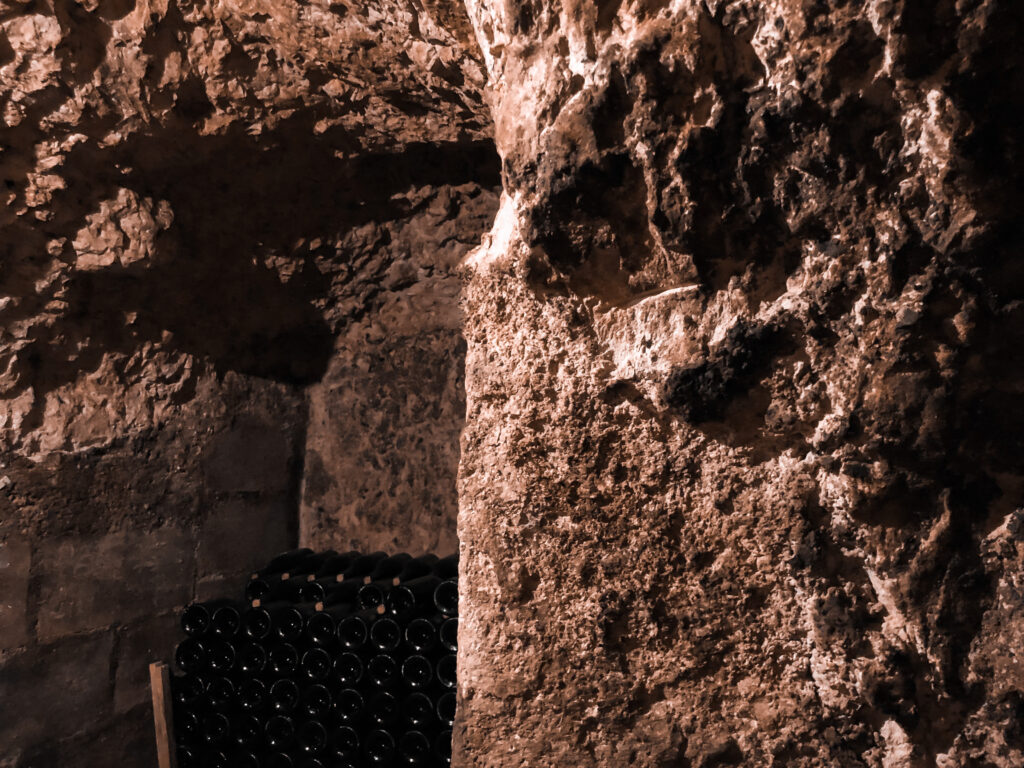
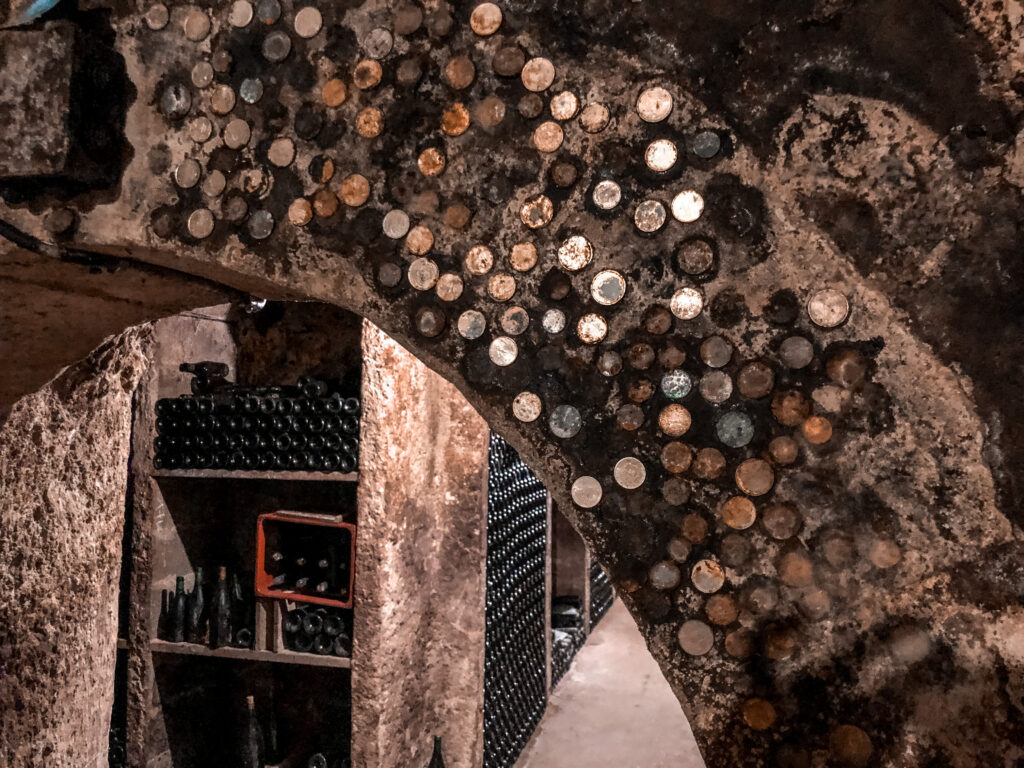
With the humidity levels around 90% and the moisture rich moulds spanning the walls – you can actually press a coin into the walls and it’ll remain, which many have done over the years with a coin dating back to 1964. We were led down the different paths that have been carved underground – some paths are for aging their methode traditionelle, another leads off to an area kept under lock and key (this is where wines from as far back as 1897 are resting). Amandine describes to us the measures her grandfather took to hide his wines from occupied forces during the 1940s, having dug further underground to save the wines he’d spent his years creating.
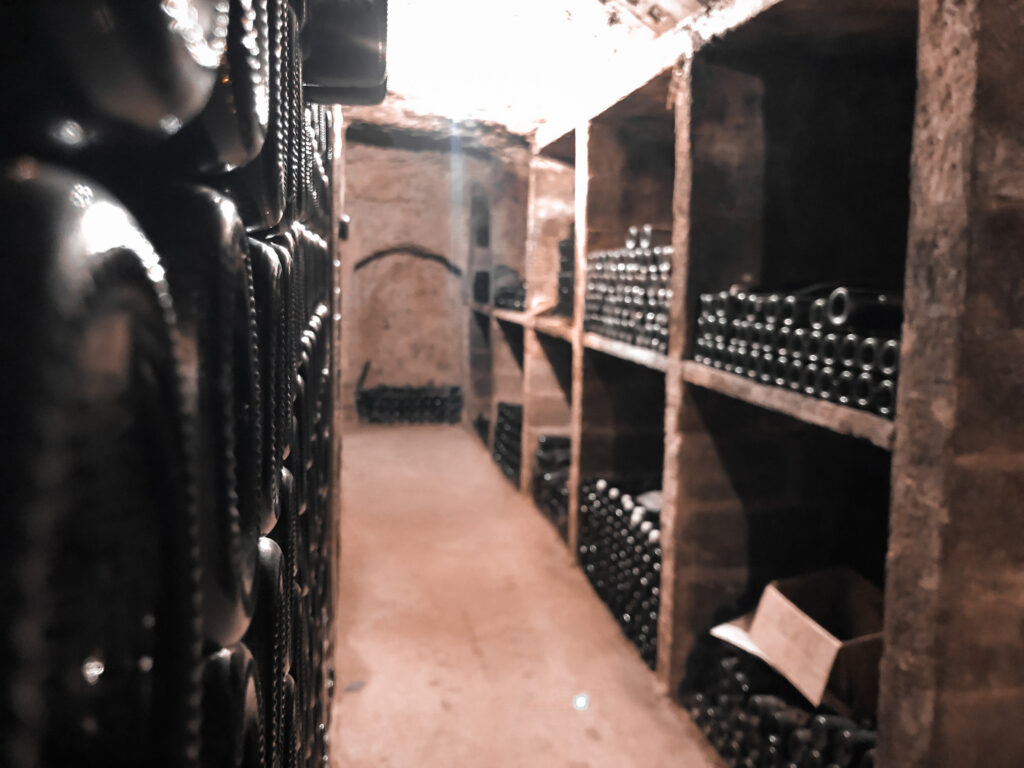
Amandine led us through the caves with a glass of Jasnières in our hand, she describes the 100% Chenin Blanc as a mineral, floral expression of the appellation which contrasts with the fruit forward Chenin Blanc from Coteaux du Loir.
Domaine de Cézin work exclusively with Chenin Blanc on their white wine range, with the dominant red variety being Pineau d’Aunis (also known as Chenin Noir but bares no relation to Chenin Blanc).

After exploring their underground cellar, we made our way through the entire Domaine de Cézin range. We began with the ‘Pearl of Cézin’, their brut méthode traditionnelle also made with 100% Chenin Blanc. This zesty sparkling had fine bubbles, aromatics of brioche and peaches with a structured minerality lending itself to the terroir of the vineyards. This will definitely be our go-to for exceptional sparkling whilst staying in Marçon.
After the bubbles, we began on the Coteaux du Loire wines. Coteaux du Loire is a small appellation consisting of 80 hectares in which 40% of production is Chenin Blanc, 40% for red wine which is largely Pineau d’Aunis with Cabernet Franc, Malbec and Gamay being permitted and finally 20% of rosé making up the total production for the appellation. The Chenin Blanc coming from this site is fruity, with zesty lemon and grapefruit characteristics and a hint of white flowers. The family has three different Coteaux du Loire whites – a dry, fruity wine with vines planted on clay limestone soils which is the ‘Domaine’. Another is the ‘Xavier’ named after the viticultural brother in the duo, this wine is made from ‘veilles vignes’ otherwise known as old vines which are sixty years old and still producing outstanding concentrated flavours and complexity. The last Coteaux du Loir white is an off-dry or ‘tendre’ style from vines planted in flint clay. We tasted the 2017 vintage which had flavours of honey and apricots which I’m told will only become more pronounced as it ages up to 10 years.
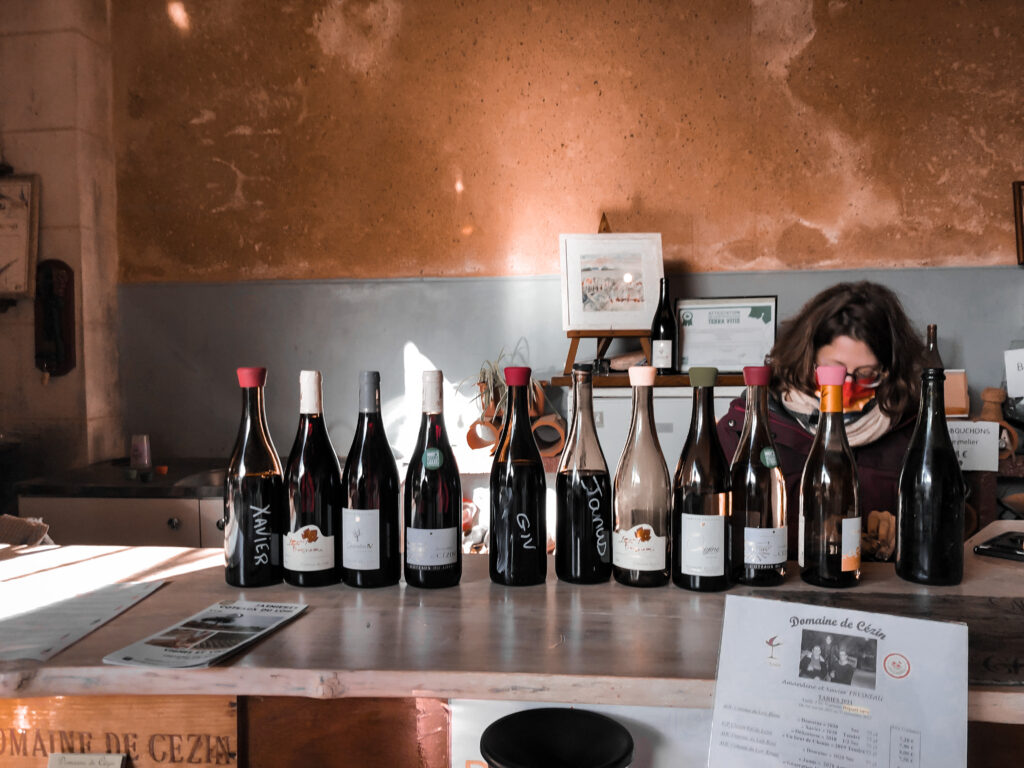
The Coteaux du Loir reds see little to no oaking, with the focus on keeping the wines pure and representative of the terroir they are grown in. Pineau d’Aunis is their dominant variety in their blends and two of their reds are varietal wines. Pineau d’Aunis is an unusual red variety that is predominantly grown in the Loire Valley. Plantings have diminished over the years as more sites are selected for Cabernet Franc and Chenin Blanc. Since 1958, plantings have decreased from 1741 hectares to only around 435 hectares today. The grapes produced are small, tight little bunches that produce light coloured wines that are spicy with noticable acidity and structured tannins. It is a grape that has been grown for over a thousand years that thrives in the Loire Valley.

The ‘Xavier Fresneau’ is a red blend from the Coteaux du Loir appellation. It is a blend of Pineau d’Aunis, Malbec and Cabernet Franc that was aged in older barrels for 12 months with a flavour profile of red berries, cherries with strong spice. It is light in colour and perfectly balanced with acidity to give you a crisp understanding of the Pineau d’Aunis variety. The Gamay that is found in the Coteaux du Loir red contains no added sulphites and is fermented using carbonic maceration. Both of these red wines are drinking exceptionally well in their youth, they are playful, fruity wines with a spice charactertized by the Pineau d’Aunis.
The stand out red wine from the Domaine was the 100% Pineau d’Aunis. The Berc’Au was aged in oak barrels crafted from the local forest: La forêt de Bercé. The oak forest is only about a 30 minute drive from the château and so, happily, we will make our way down to walk amongst the oak trees that are producing barrels that are aging this almost forgotten variety in order to create a wine that remains largely unknown. Even in France.
The Berc’Au is a well-integrated wine that has a similarity to the spice of Shiraz but the silkiness and colour of Pinot Noir (more the Alsatian style) and yet, it is somehow like neither of those. It is Pineau d’Aunis, an almost forgotten grape of the Loire. Domaine de Cézin proudly exhibits this wine as their flagship because it is a wholesome representation of not just the terroir, but the entirety of this region. The hands that harvested these wines, the soil that grew these vines, the oak that ages the wine and the love from a fourth generation winemaking team are all integrated into this bottle that is not only 100% Pineau d’Aunis but 100% born from the land of Coteaux du Loir.
We then went on to try the Jasnières. Jasnières is a small appellation consisting of only 65 hectares of Chenin Blanc. The strict rules do not allow for any other grape under the Jasnières AOC and currently there are only 24 winemakers producing Jasnières. There are two styles of the Jasnières in the Domaine de Cézin’s range, a dry wine and a sweet wine. The dry, flinty and mineral Chenin that has an exceptional finish is called the Origine. It has hints of peach, but it’s pronounced aromas are more of a saline, mineral and terroir driven wine. The shyness in fruit is made up in the slight honey, floral notes and texture you find. Amandine points out that the treatment of the Chenin Blanc in the cellar is exactly the same for both the Coteaux du Loir and Jasnières appellations, it is only the harvest dates that differ. This makes the fruit forward flavours of Coteaux du Loir and the minerality of the Jasnières a true expression of their vineyard sites and terroir. The winemaking practice doesn’t differ and yet the differences found on the palate are immense, taking you through a sensory journey of soil, climate and taste in two simple glasses.
The Clos de Fleuries is the only sweet wine that the domaine produces, and the site has been specifically chosen to produce the finest aromatics and enhanced fruity honeyed flavours. The wine is named after the vineyards from which the grapes are harvested in the Jasnières appellation, some years the wine contains more noble rot than others but the sweetness is coming predominantly from vine dried Chenin. The viscosity of the wine is round in the mouth with an oily undertone. Pronounced flavours of honey, dried apricots and a hint of jasmine all whilst being underlined with the minerality that the tufa limestone brings to the Jasnières appellation. It has spent time on the lees in older oak barrels and is the perfect accompaniment to some local goat cheese to cut through the fat.
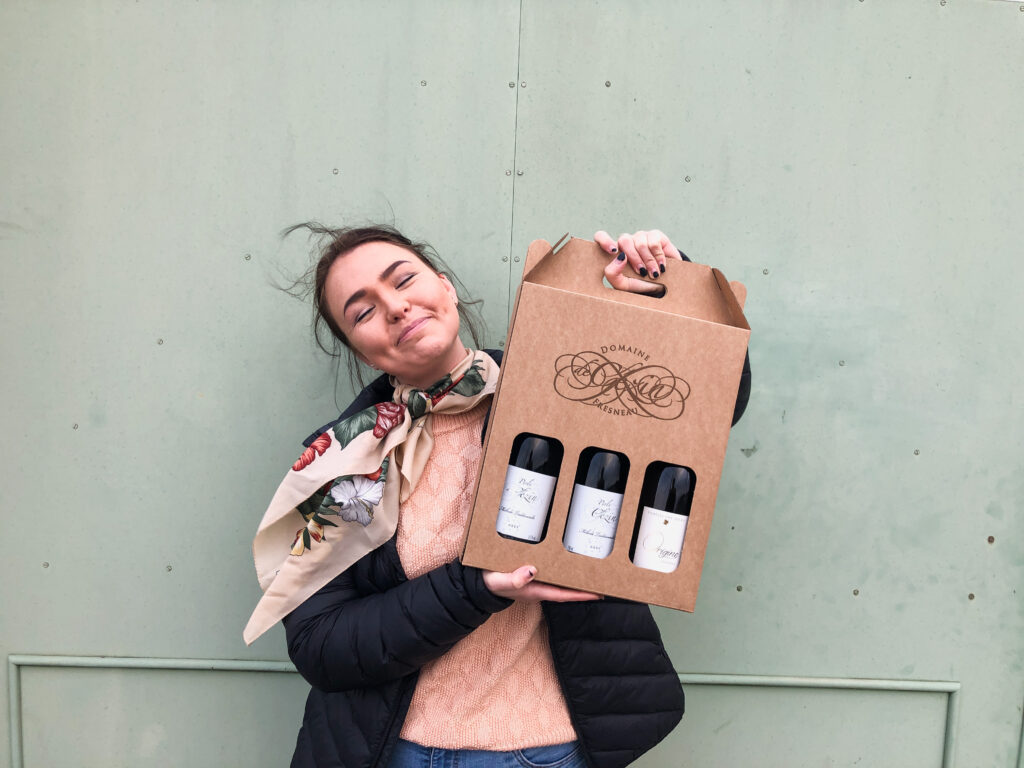
Thank you so much to Amandine and Xavier for welcoming us into your caves and sharing your passion with us. We left with out hearts fuller, our passion reignited and our luggage a few bottles heavier!
A visit to the domaine is a tantalizing experience. The earthy damp walls that lively mould thrives in, the roots of sixty year old vines hanging above you as you swirl the passion of a winemaker in your glass is only the beginning of your descent into their underground caves of winemaking finesse.
You never know what you might find when you leave your gates behind and take a walk up a muddy countryside road. Hopefully it is local French winemakers breaking boundaries and fermenting lesser known grape varieties in an overlooked wine region.
Chasing wine in every corner of the world,
Tristyn
Domaine de Cézin
contact@domainedecezin.com
www.boutique.domainedecezin.com